
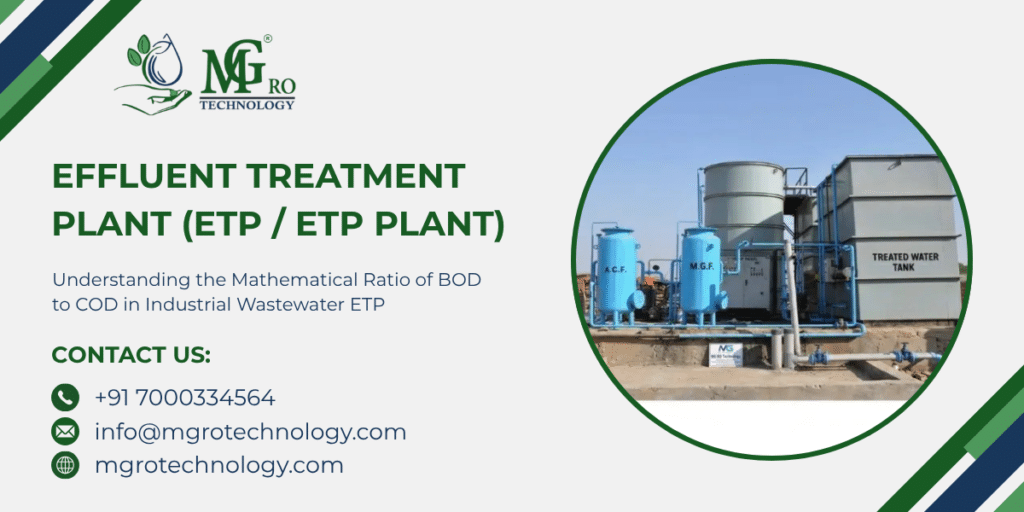
In textile processing, chemical synthesis, pharmaceutical manufacturing, food processing, and heavy industrial facilities, managing complex liquid waste streams is critical for environmental compliance. Industrial manufacturing generates heterogeneous effluent containing diverse organic compounds, synthetic chemicals, suspended solids, and toxic constituents that must be remediated prior to discharge or reuse.
Achieving effective pollutant reduction depends fundamentally on an engineered Effluent Treatment Plant (ETP Plant).
An industrial effluent treatment plant incorporates equalization basins, primary chemical dosing tanks, biological aeration reactors, secondary clarifiers, and advanced tertiary filtration media designed to remove organic loading.
Operating an industrial effluent treatment plant without evaluating the fundamental organic character of incoming wastewater leads to biological culture collapse, improper chemical dosing, incomplete organic degradation, regulatory discharge non-compliance, and excessive operational expenditure. Understanding the core theoretical mechanics governing Biochemical Oxygen Demand, Chemical Oxygen Demand, organic fraction biodegradability, and refractory chemical persistence enables environmental engineers to design optimized treatment pathways. This comprehensive technical guide provides an in-depth theoretical analysis of BOD to COD ratios in industrial wastewater ETP systems.
Theoretical Dynamics of Biochemical and Chemical Oxidation Demand
Evaluating organic loading in industrial wastewater requires understanding how different organic compounds degrade under biological versus chemical oxidation conditions:
+-----------------------------------------------------------------+
|                   RAW INDUSTRIAL EFFLUENT STREAM                |
| (Contains mixture of biodegradable & recalcitrant organics)     |
+-----------------------------------------------------------------+
                                  |
                                  v
+-----------------------------------------------------------------+
|             BIOMASS METABOLISM & CHEMICAL OXIDATION             |
| (Microorganisms consume simple sugars; dichromate oxidizes all) |
+-----------------------------------------------------------------+
                                  |
                                  v
+-----------------------------------------------------------------+
|             BIODEGRADABILITY RATIO EVALUATION & ETP ROUTING     |
| (Determines routing to biological reactor vs chemical oxidation)|
+-----------------------------------------------------------------+
1. Biochemical Oxygen Demand and Microbial Degradation Kinetics
-
Theoretical Principle: Biochemical Oxygen Demand represents the amount of dissolved oxygen required by aerobic microorganisms to biologically breakdown and oxidize soluble organic matter present in a water sample. It reflects the readily biodegradable organic fraction available for microbial consumption.
-
Biological Treatability: A high relative biochemical demand indicates that the wastewater organic load consists primarily of simple, non-toxic, bio-accessible carbon sources that can be easily metabolized within aerobic biological aeration tanks.
2. Chemical Oxygen Demand and Total Organic Load Spectrum
-
Theoretical Principle: Chemical Oxygen Demand measures the total quantity of oxygen required to chemically oxidize all organic compounds in a water sample, utilizing strong chemical oxidants under high thermal conditions. This parameter captures both bio-accessible organics and complex recalcitrant chemical compounds.
-
Refractory Persistence: In complex industrial effluents containing synthetic dyes, solvents, pesticides, or polymers, chemical demand significantly exceeds biological demand. The difference between these parameters represents the non-biodegradable or refractory organic fraction that resists biological breakdown.
Theoretical Analysis of Biodegradability Fractions and ETP Routing
Evaluating the relative ratio between biological and chemical demand guides the overall structural design of an effluent treatment facility:
-
High Biodegradability Index: When biological demand forms a major proportion of total chemical demand, the effluent is classified as highly biodegradable. Such wastewater is ideally suited for direct biological treatment utilizing conventional activated sludge or moving bed biofilm reactors.
-
Moderate Biodegradability Index: Wastewater exhibiting moderate biodegradability contains a blend of bio-accessible organics and complex chemical compounds. This requires primary chemical precipitation or advanced oxidation pre-treatment to break down complex molecules before biological digestion.
-
Low Biodegradability Index: Effluents with low biological demand relative to total chemical demand are classified as non-biodegradable or toxic. Direct introduction into biological reactors starves or poisons active biomass cultures, requiring dedicated chemical oxidation or thermal treatment pathways.
-
Refractory Organic Accumulation: High refractory chemical fractions pass through standard biological aeration tanks completely unaltered. Treating such streams requires specialized tertiary polishing, granular activated carbon adsorption, or advanced oxidation processes.
System Integration Across Industrial Water Treatment Infrastructure
Industrial effluent treatment plants operate as central environmental protection systems within integrated industrial facilities:
-
Primary Industrial Wastewater Remediation: Complex liquid waste processing and organic pollutant reduction are executed through an engineered Effluent Treatment Plant.
-
Municipal & Domestic Sewage Treatment: Sanitary wastewater streams originating from plant facilities are processed using a specialized Sewage Treatment Plant.
-
Pre-Treatment Hardness & Scaling Control: Process water feeds are softened using a high-capacity Water Softener Plant to reduce scaling risks in downstream operations.
-
High-Purity Process Water Supply: Low-TDS process feed water is produced using an advanced Industrial RO Plant fitted with high-rejection Industrial RO Membrane elements.
-
Process Temperature Thermal Control: Cooling fluids and operating temperatures are maintained across chemical reactors using a heavy-duty Industrial Water Chiller.
-
Comprehensive Turnkey Manufacturing: Plant engineering, skid fabrication, and biological reactor design are delivered by a trusted Water Treatment Plant MFG.
Theoretical Best Practices for ETP System Selection
To ensure long-term treatment efficiency and regulatory compliance across industrial wastewater installations, design engineers follow three core theoretical guidelines:
-
Conduct Characterization Studies across Production Cycles: Perform continuous wastewater sampling across varying manufacturing batch cycles to capture fluctuations in biological and chemical organic loading profiles.
-
Incorporate Chemical Pre-Oxidation for Refractory Streams: Integrate advanced chemical oxidation or electrocoagulation pre-treatment stages upstream of biological reactors when treating non-biodegradable industrial waste streams.
-
Maintain Balanced Nutrients for Biomass Synthesis: Ensure primary effluent entering biological aeration tanks maintains appropriate carbon, nitrogen, and phosphorus nutrient ratios to sustain healthy microbial growth.
Conclusion
Understanding the theoretical dynamics of biological and chemical oxygen demand is essential for designing efficient, reliable industrial effluent treatment plants. By accurately evaluating biodegradability fractions and selecting targeted chemical, biological, or physical treatment pathways, industrial facilities ensure complete pollutant removal, protect biological ecosystems, and achieve continuous environmental compliance.
Looking for Premium Industrial Water Treatment and Wastewater Solutions? Explore our complete range of high-efficiency Effluent Treatment Plant installations, advanced Sewage Treatment Plant setups, heavy-duty Water Softener Plant units, industrial Industrial RO Plant and Industrial RO Membrane systems, precise Industrial Water Chiller units, and custom engineering from a leading Water Treatment Plant MFG at MGRO Technology. Contact our expert engineering team today.
 Users Today : 6
 Users This Month : 726
 Total Users : 770