
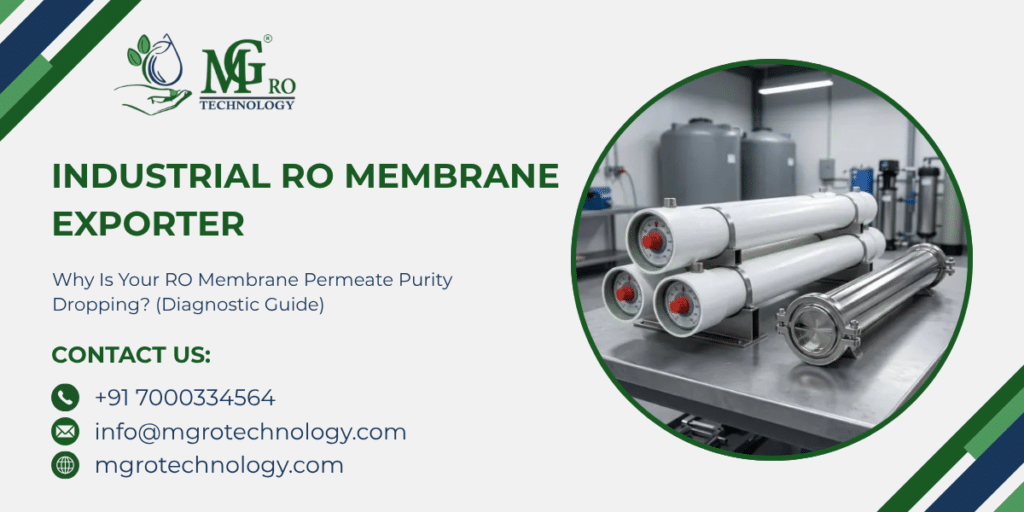
In pharmaceutical clean steam systems, high-pressure power generation boilers, semiconductor manufacturing, and beverage processing facilities, maintaining ultra-pure water quality standards is non-negotiable. Reverse osmosis systems are designed to deliver consistent low-conductivity permeate by filtering out inorganic salts, organic molecules, and dissolved ions through high-rejection polymer barriers.
Sustaining continuous high-purity water output relies on the physical and chemical integrity of an engineered Industrial RO Membrane.
An industrial reverse osmosis element features semi-permeable polyamide thin-film composite layers, porous supporting structures, interconnecting O-ring seals, and permeate collection tubes engineered to achieve superior salt rejection performance.
Ignoring a gradual or sudden decline in permeate purity leads to severe downstream process contamination, rapid ion-exchange resin exhaustion, costly chemical re-sanitization cycles, premature membrane replacement, and unscheduled production halts. Understanding the theoretical root causes governing polyamide polymer oxidation, mechanical seal bypass, physical surface abrasion, and boundary layer concentration polarization enables facility engineers to diagnose purity drops accurately. This comprehensive diagnostic guide provides an in-depth theoretical analysis of why reverse osmosis membrane permeate purity drops.
Theoretical Degradation Mechanics of Water Purity Decline
Loss of product water purity stems from three distinct physical and chemical breakdown mechanisms occurring within the membrane element array:
+-----------------------------------------------------------------+
|                  CHEMICAL POLYMER DEGRADATION                   |
| (Oxidizing agents break polyamide bonds, increasing salt flux)  |
+-----------------------------------------------------------------+
                                  |
                                  v
+-----------------------------------------------------------------+
|                  MECHANICAL & PHYSICAL SEPARATION BYPASS        |
| (Rolled O-rings, damaged couplers, or cracked permeate tubes)   |
+-----------------------------------------------------------------+
                                  |
                                  v
+-----------------------------------------------------------------+
|               BOUNDARY LAYER CONCENTRATION POLARIZATION         |
| (Stagnant high-salinity layer forces ions through polymer pore) |
+-----------------------------------------------------------------+
1. Chemical Oxidation and Polyamide Polymer Degradation
Theoretical Principle: Thin-film composite reverse osmosis membranes feature a dense polyamide active layer that is highly vulnerable to chemical oxidation. Exposure to free chlorine, ozone, or strong oxidizing biocides breaks the delicate amide polymer chains.
Irreversible Pore Damage: Oxidation increases the effective pore size of the active layer, resulting in an irreversible rise in salt passage. While permeate water flow may appear to increase, product water conductivity rises sharply due to loss of selective barrier rejection.
2. Mechanical Inter-Element Bypass and Physical Abrasion
Theoretical Principle: Concentrated raw feed water and purified permeate water are physically separated by mechanical O-ring seals located on inter-element couplers and vessel end-caps. Rolling, cracking, or displacement of these seals allows high-TDS feed water to leak directly into the permeate collector tube.
Surface Abrasion: Suspended crystalline particulates or sharp scale fragments passing through feed channels can physically scratch the fragile polyamide coating, creating localized physical pathways for uninhibited ion passage.
Systematic Diagnostic Analysis of Permeate Purity Loss
Diagnosing the exact root cause of water quality decline involves evaluating specific operational symptoms and physical indicators across the membrane system:
Sudden High-TDS Spike Across Single Vessel Array: A sudden, localized rise in permeate conductivity typically points to mechanical seal failure, rolled inter-element O-rings, or a cracked permeate collector tube within that specific pressure vessel.
Gradual Purity Drop Accompanied by High Permeate Flow: A slow decline in salt rejection paired with abnormally high permeate flow rates strongly indicates chemical oxidation of the polyamide layer caused by chlorine breakthrough.
Gradual Purity Drop Accompanied by Decreased Permeate Flow: A simultaneous drop in both product purity and permeate flow rate signals severe mineral scaling or biofouling, which accelerates concentration polarization along the membrane boundary layer.
End-Stage Purity Loss in Multi-Stage Systems: Elevated conductivity originating predominantly from final-stage vessels indicates localized mineral scaling driven by high salt concentrations exceeding solubility limits.
System Integration Across Industrial Water Treatment Infrastructure
Industrial reverse osmosis membrane elements operate as the core separation technology within an integrated water treatment facility:
Primary Membrane Separation: High-purity product water generation and salt rejection depend on an engineered Industrial RO Plant.
High-Performance Separation Elements: Long-term filtration stability requires selecting a premium Industrial RO Membrane suited to feed water chemistry.
Hardness Removal & Scale Prevention: Pre-treating raw water with a high-capacity Water Softener Plant eliminates calcium and magnesium scaling risks prior to membrane entry.
Industrial Wastewater Recycling: Process wastewater streams are treated and reclaimed using advanced Effluent Treatment Plant and Sewage Treatment Plant systems.
Thermal Regulation & Water Cooling: Precise operating fluid temperatures are maintained across industrial processes using a heavy-duty Industrial Water Chiller.
Comprehensive Turnkey Manufacturing: System integration, skid fabrication, and custom engineering are executed by an experienced Water Treatment Plant MFG.
Theoretical Best Practices for Purity Preservation
To prevent unexpected product water quality degradation and extend membrane operational lifespan, design engineers follow three core theoretical guidelines:
Maintain Continuous Dechlorination Verification: Monitor oxidation-reduction potential sensors and perform routine bisulfite chemical checks to guarantee complete destruction of free chlorine before water contacts polyamide layers.
Conduct Probing and Conductivity Profiling: Perform individual vessel probing and vessel-by-vessel conductivity profiling during routine audits to identify failing inter-element seals before total plant water quality degrades.
Prevent Hydraulic Pressure Surges During Start-Up: Utilize variable frequency drives and slow-opening automated valves to prevent water hammer and sudden pressure spikes from damaging internal membrane seals.
Conclusion
Understanding the theoretical causes of permeate purity loss is essential for maintaining reliable high-purity water treatment operations. By differentiating between chemical polymer oxidation, mechanical seal bypass, and scaling-induced concentration polarization, facility engineers can implement precise corrective measures, preserve membrane assets, and ensure uncompromised product water quality.
Looking for Premium Industrial Water Treatment and Filtration Solutions? Explore our complete range of high-efficiency Industrial RO Plant setups, advanced Industrial RO Membrane options, heavy-duty Water Softener Plant units, industrial Effluent Treatment Plant and Sewage Treatment Plant installations, precise Industrial Water Chiller systems, and custom engineering from a leading Water Treatment Plant MFG at MGRO Technology. Contact our expert engineering team today.
 Users Today : 6
 Users This Month : 726
 Total Users : 770