
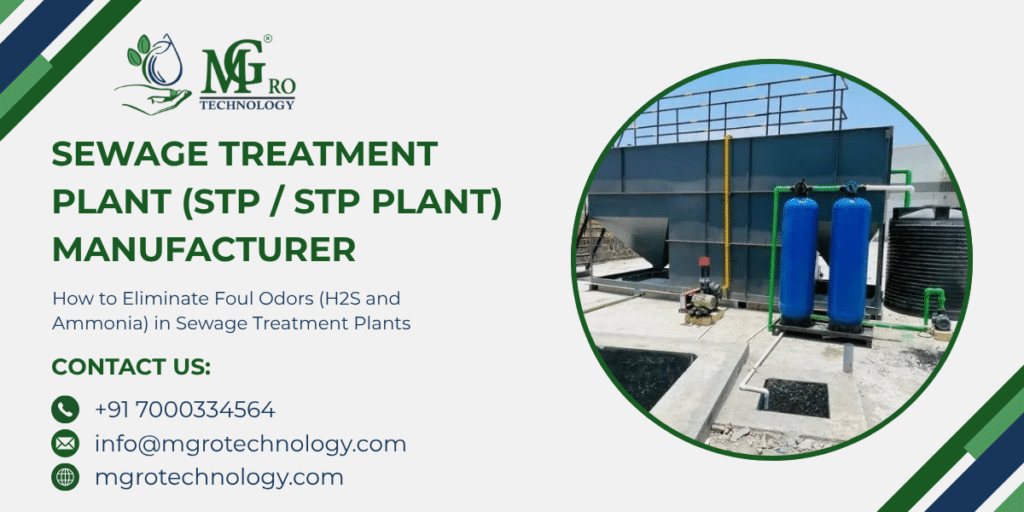
In commercial real estate complexes, residential townships, hotel facilities, and municipal utility setups, managing air quality and nuisance odors is critical. Raw domestic sewage contains high loads of organic matter, sulfur compounds, nitrogenous waste, and volatile organic acids that undergo biological transformations during transport and treatment.
Maintaining an odor-free environment across facilities depends fundamentally on the design of an engineered Sewage Treatment Plant (STP Plant).
A commercial sewage treatment plant incorporates enclosed collection sumps, equalization basins, biological aeration tanks, sludge handling units, and chemical odor control scrubbing systems designed to neutralize volatile gaseous emissions.
Operating sewage treatment facilities without addressing septic conditions leads to corrosive hydrogen sulfide gas generation, pungent ammonia releases, severe structural concrete corrosion, tenant complaints, and regulatory health violations. Understanding the core theoretical mechanisms governing anaerobic sulfate reduction, protein deamination, volatile organic sulfur synthesis, and gas-phase chemical scrubbing enables environmental engineers to eliminate foul odors effectively. This comprehensive technical guide provides an in-depth theoretical analysis of odor elimination strategies in sewage treatment plants.
Theoretical Kinetics of Anaerobic Septicity and Odor Generation
Noxious odors in sewage treatment facilities stem primarily from biological reduction reactions occurring in oxygen-depleted collection networks:
+-----------------------------------------------------------------+
|                   RAW ANAEROBIC SEWAGE ENVIRONMENT              |
| (Stagnant flow & oxygen depletion in collection sumps)          |
+-----------------------------------------------------------------+
                                  |
                                  v
+-----------------------------------------------------------------+
|             BIOLOGICAL SULFATE REDUCTION & AMMONIFICATION       |
| (Desulfovibrio bacteria reduce sulfates to Hydrogen Sulfide)    |
+-----------------------------------------------------------------+
                                  |
                                  v
+-----------------------------------------------------------------+
|             GAS-PHASE ABSORPTION & BIO-OXIDATION SCRUBBING       |
| (Bio-filters & chemical wet scrubbers neutralize volatile gases)|
+-----------------------------------------------------------------+
1. Anaerobic Sulfate Reduction and Hydrogen Sulfide Synthesis
Theoretical Principle: When domestic sewage becomes stagnant in collection sumps or equalization basins, dissolved oxygen is depleted rapidly. Under strictly anaerobic conditions, obligate anaerobic bacteria utilize dissolved sulfate ions as terminal electron acceptors for metabolic oxidation.
Corrosive Malodor Dynamics: This biochemical pathway converts inorganic sulfates into hydrogen sulfide gas. Hydrogen sulfide releases a pungent rotten-egg odor and dissolves into moisture films on concrete walls, forming sulfuric acid that severely corrodes civil infrastructure.
2. Protein Deamination and Volatile Ammonia Emissions
Theoretical Principle: Nitrogenous organic matter present in human waste and food residues undergoes enzymatic hydrolysis and ammonification. Heterotrophic microorganisms break down urea and proteins into dissolved ammonium ions and volatile free ammonia.
pH-Dependent Gas Volatilization: The equilibrium between dissolved ammonium ions and gaseous free ammonia is highly pH-dependent. At elevated alkaline pH levels, the chemical equilibrium shifts, releasing pungent free ammonia gas into surrounding headspace air pockets.
Comprehensive Analysis of Odor Elimination Technologies
Eliminating foul gaseous emissions requires combining liquid-phase septicity prevention with advanced gas-phase capture and scrubbing architectures:
Liquid-Phase Nitrate Dosing and Redox Control: Injecting calcium nitrate into raw sewage sumps raises the oxidation-reduction potential. Nitrate-reducing bacteria outcompete sulfate-reducing bacteria, completely suppressing hydrogen sulfide generation in the liquid phase.
Gas-Phase Bio-Trickling Filter Oxidation: Foul headspace air is drawn through packed bio-filter media colonized by specialized autotrophic bacteria. These microorganisms oxidize hydrogen sulfide and organic sulfur compounds into odorless sulfate species using natural metabolic oxidation.
Chemical Packed-Tower Wet Scrubbing: Multi-stage chemical wet scrubbers utilize caustic soda and sodium hypochlorite solution sprays to absorb and oxidize acidic hydrogen sulfide gases into soluble salts before atmospheric discharge.
Activated Carbon Vapor Adsorption: Granular activated carbon vessels remove low-concentration volatile organic compounds, mercaptans, and trace odorants through high-surface-area physical and chemical adsorption mechanisms.
System Integration Across Industrial Water Treatment Infrastructure
Sewage treatment plants operate as central environmental protection systems within integrated commercial and industrial facilities:
Commercial & Domestic Wastewater Purification: Sanitary wastewater purification and non-potable recycling are executed through a specialized Sewage Treatment Plant.
Industrial Wastewater Remediation: Heavy industrial liquid waste processing and organic pollutant reduction are handled via an engineered Effluent Treatment Plant.
Hardness Removal & Scale Prevention: Utility water supplies are softened using a high-capacity Water Softener Plant to protect building plumbing networks.
High-Purity Water Generation: Low-TDS process feed water is produced using an advanced Industrial RO Plant fitted with high-rejection Industrial RO Membrane elements.
HVAC Thermal Regulation: Cooling tower loops and HVAC operating temperatures are maintained across commercial buildings using a heavy-duty Industrial Water Chiller.
Comprehensive Turnkey Manufacturing: Plant engineering, skid fabrication, and biological reactor integration are delivered by a trusted Water Treatment Plant MFG.
Theoretical Best Practices for Odor Control Design
To prevent septicity and eliminate foul odor emissions in sewage treatment plants, design consultants follow three core theoretical guidelines:
Maintain Continuous Dissolved Oxygen in Equalization Basins: Install coarse-bubble aeration grids in raw sewage equalization tanks to maintain aerobic conditions and prevent anaerobic septicity during peak storage periods.
Enclose High-Odor Equipment and Extract Headspace Air: Install tight-fitting fiberglass covers over primary screens, grit chambers, and sludge holding tanks, maintaining negative air pressure to extract foul gases to treatment systems.
Monitor Headspace Hydrogen Sulfide Concentration Continuously: Deploy online hydrogen sulfide gas sensors inside equipment enclosures to track odor levels and automatically adjust chemical scrubber dosing rates.
Conclusion
Understanding the theoretical mechanics of anaerobic septicity, hydrogen sulfide synthesis, and ammonia volatilization is essential for designing effective odor control systems in sewage treatment plants. By maintaining aerobic liquid-phase conditions, enclosing foul process zones, and deploying bio-trickling filters or chemical scrubbers, facility managers eliminate nuisance malodors, prevent infrastructure corrosion, and ensure comfortable surrounding environments.
Looking for Premium Commercial Sewage and Industrial Water Treatment Solutions? Explore our complete range of high-efficiency Sewage Treatment Plant installations, advanced Effluent Treatment Plant setups, heavy-duty Water Softener Plant units, industrial Industrial RO Plant and Industrial RO Membrane systems, precise Industrial Water Chiller units, and custom engineering from a leading Water Treatment Plant MFG at MGRO Technology. Contact our expert engineering team today.
 Users Today : 13
 Users This Month : 743
 Total Users : 787