
Industrial manufacturing processes—spanning chemical synthesis, textile dyeing, pharmaceuticals, food processing, and metal finishing—consume vast amounts of fresh water. Consequently, these operations generate hazardous wastewater known as industrial effluent.
Directly discharging untreated effluent into natural bodies of water or municipal sewer lines causes severe environmental destruction, contaminates local groundwater supplies, and results in heavy legal penalties from state Pollution Control Boards (PCB / GPCB).
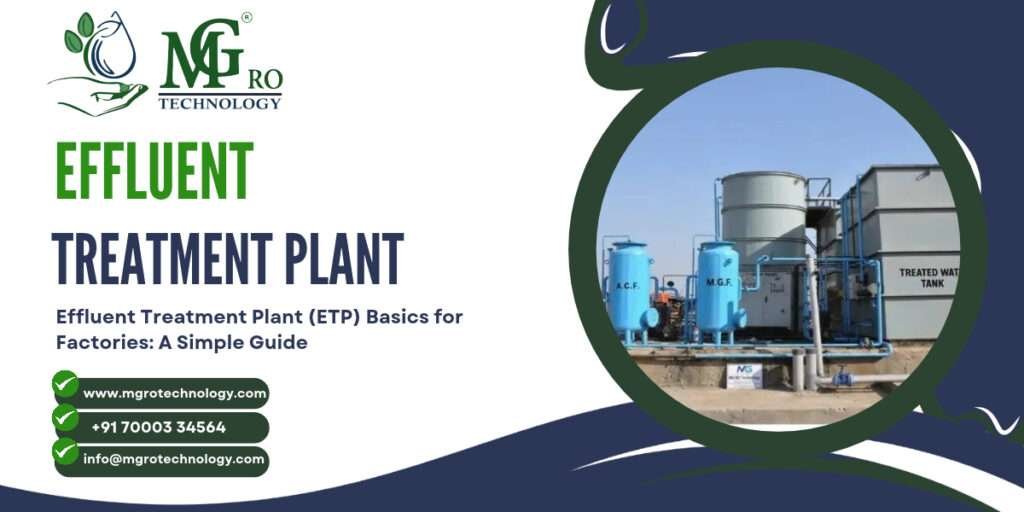
An Effluent Treatment Plant (ETP) is a specialized wastewater treatment facility engineered to purify industrial wastewater, remove toxic pollutants, lower chemical hazards, and allow factories to safely discharge treated water or reuse it within their utility cycles.
1. Why Every Manufacturing Unit Needs an ETP
Effluent composition varies significantly across industries. Chemical units generate high chemical oxygen demand (COD), textile plants discharge heavy dye pigments, and metal processing facilities produce acidic wastewater rich in heavy metals.
+-------------------------------------------------------------------------+
|                    CORE PURPOSES OF AN INDUSTRIAL ETP                   |
+-------------------------------------------------------------------------+
| Environmental Protection -> Removes toxic organic & inorganic chemicals |
|                                                                         |
| Regulatory Compliance   -> Meets Pollution Control Board discharge norms |
|                                                                         |
| Resource Recovery       -> Enables treated water reuse in cooling towers|
+-------------------------------------------------------------------------+
Regulatory Compliance: Strict environmental regulations mandate that all chemical, pharmaceutical, textile, and manufacturing facilities treat wastewater to meet specific discharge limits for pH, Biological Oxygen Demand (BOD), Chemical Oxygen Demand (COD), and Total Suspended Solids (TSS).
Corporate Sustainability & ZLD: Implementing efficient wastewater treatment allows facilities to progress toward Zero Liquid Discharge (ZLD), minimizing raw water intake costs and protecting local ecosystems.
2. The Multi-Stage Effluent Treatment Process
To turn heavily contaminated industrial wastewater into safe, clear water, a standard ETP utilizes a sequential multi-stage treatment approach:
+-------------------------------------------------------------------------+
|                     STAGES OF EFFLUENT TREATMENT                        |
+-------------------------------------------------------------------------+
| Pre-Treatment -> Bar Screens & Equalization Tank (Flow & pH balancing)  |
|                                                                         |
| Primary       -> Chemical Coagulation, Flocculation & Primary Clarifier |
|                                                                         |
| Secondary     -> Biological Aeration Basin (Bacterial COD/BOD Removal)  |
|                                                                         |
| Tertiary      -> Sand/Carbon Filtration, Disinfection & RO Polishing   |
+-------------------------------------------------------------------------+
Stage 1: Pre-Treatment & Equalization
Screening: Bar screens catch large physical debris such as plastic rags, wood pieces, and metal scraps to protect downstream pumps from clogging.
Oil & Grease Trap: Floating oils, fats, and grease are skimmed off the water surface using baffle plates or mechanical skimmers.
Equalization Tank: Effluent flow rates and chemical concentrations fluctuate throughout manufacturing shifts. The equalization tank homogenizes the incoming wastewater volume and neutralizes extreme pH spikes to deliver a stable, consistent feed to subsequent treatment units.
Stage 2: Primary Treatment (Physicochemical Process)
Primary treatment targets suspended solids, insoluble organic matter, and colloidal turbidity through chemical dosing:
Coagulation: Chemical coagulants (such as alum or polyaluminum chloride) are flash-mixed into the wastewater to neutralize the electrical charges on fine suspended particles.
Flocculation: Slow mixing encourages tiny neutralized particles to bind together into larger, heavier clumps called flocs.
Primary Clarification: The water enters a settling tank where heavy flocs settle to the bottom as primary sludge, which is removed via mechanical scraper arms.
Stage 3: Secondary Treatment (Biological Process)
Biological treatment relies on living micro-organisms (aerobic bacteria) to digest dissolved organic pollutants that physical chemical treatment cannot remove.
Aeration Basin: Air blowers continuously bubble oxygen through the wastewater, allowing aerobic bacteria to digest dissolved organic carbon, converting it into carbon dioxide, water, and new biological cell mass.
Secondary Settling Tank (Clarifier): The bacterial mass (activated sludge) settles out from the clear treated liquid. A portion of this biological sludge is recycled back to the aeration basin to maintain micro-organism levels, while surplus sludge is sent to dewatering units.
Stage 4: Tertiary & Advanced Treatment
Tertiary treatment polishes the clarified effluent to meet stringent discharge standards or prepare it for internal factory reuse:
Pressure Sand & Activated Carbon Filters: Remove residual fine turbidity, color, and trace organic compounds.
Disinfection: Chlorine or ultraviolet (UV) systems eliminate residual pathogens.
Advanced Membrane Polishing: Treated water can be passed through an Industrial RO Plant to strip dissolved salts (TDS), making the water suitable for boiler feed or process cooling systems.
3. Industrial Sludge Management
A crucial byproduct of every ETP is chemical and biological sludge. Sludge management involves:
Sludge Thickening: Concentrating liquid sludge to reduce water volume.
Mechanical Dewatering: Utilizing plate filter presses or decanter centrifuges to squeeze water out, creating dry sludge cakes suitable for secure landfill disposal or incineration.
Summary of Best Practices
Operating an effective Effluent Treatment Plant requires proper initial plant design tailored to your specific effluent characteristics, daily operational monitoring of aeration basins, precise chemical dosing control, and disciplined sludge dewatering practices.
To achieve complete environmental compliance and optimize utility costs, integrate your facility’s wastewater systems with a custom Effluent Treatment Plant (ETP) and secondary polishing solutions.
Consult with MG RO Technology Engineers
Need expert guidance on designing, installing, or upgrading an Effluent Treatment Plant for your factory?
MGRO Technology specializes in manufacturing custom-engineered Effluent Treatment Plants (ETP), Sewage Treatment Plants (STP), and Industrial RO Plants built to meet strict environmental standards.
Contact MG RO Technology Engineers Today for a complete wastewater treatment audit.
 Users Today : 29
 Users This Month : 711
 Total Users : 755